Swiss-engineered water treatment — nationwide technical support across Pakistan

How KalyxX technology works

KalyxX uses two different physical mechanisms depending on where the unit sits. RedLine treats the whole property at the main line with TGP®. The 100 Mini protects one appliance at its angle valve with IPS100 plus mechanical filtration. They are not the same process and should not be read interchangeably.

Results depend on water conditions, hardness, flow rate, installation quality and the product selected.

RedLine · main line

TGP® Turbulent Galvanic Polarisation

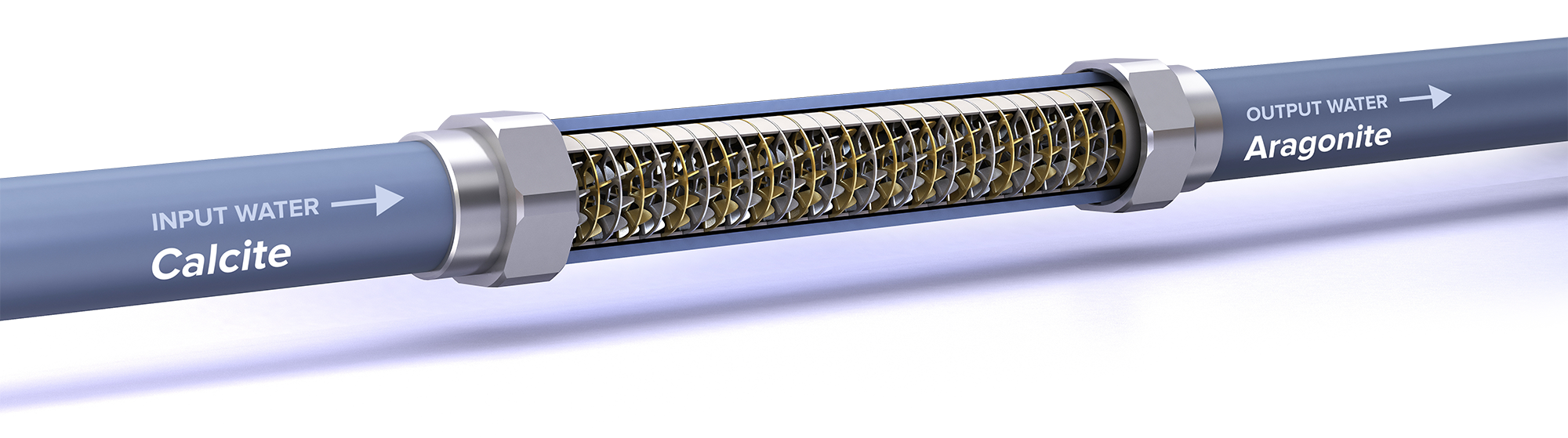
Cutaway diagram showing the internal TGP® technology of KalyxX RedLine

Step 1 — Water enters the stainless steel chamber

The KalyxX RedLine body (stainless steel 1.4301) contains a structured electrode arrangement. As water passes across it, a galvanic effect changes how dissolved calcium and magnesium behave, so hardness minerals are more likely to stay suspended instead of bonding to pipe walls and heating surfaces.

Flow-section diagram showing water passing through the KalyxX RedLine chamber

Step 2 — Turbulent flow increases contact

The internal geometry forces the water into a turbulent path rather than a straight line. More contact with the active surfaces is what allows this physical treatment to work with no chemicals and no external energy supply. The manufacturer's confirmed limescale-formation reduction efficiency is 76%.

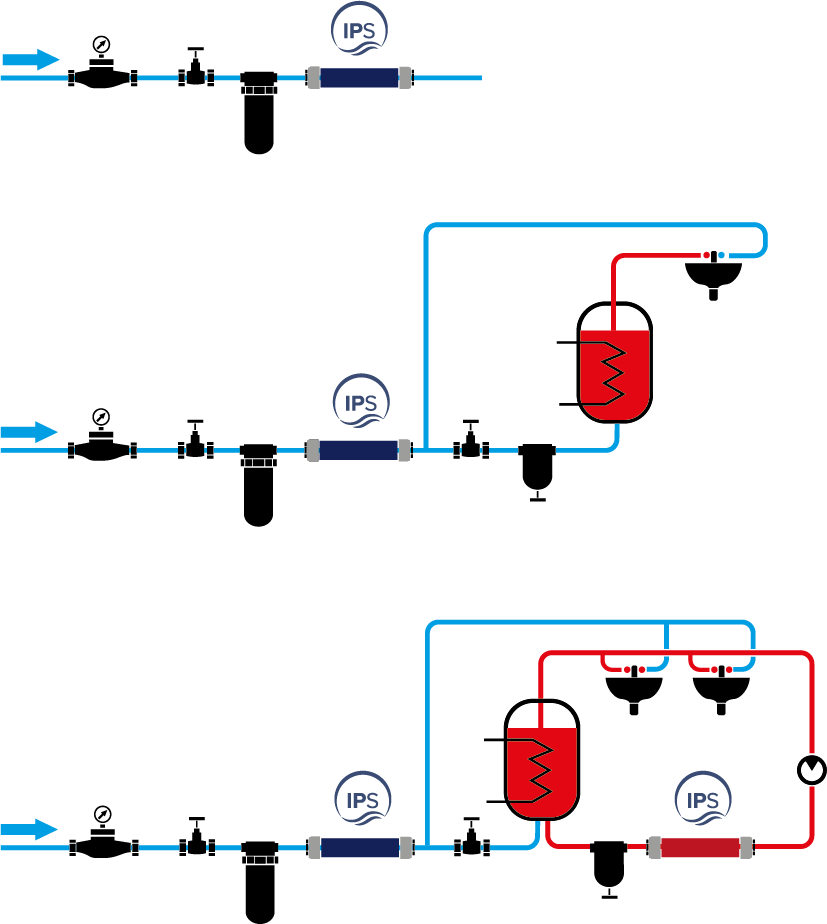
Installation scheme showing KalyxX RedLine fitted on the main water inlet

Step 3 — Protection travels downstream

Fitted in-line on the main cold water inlet, one RedLine covers the pipework, valves, taps, shower heads and water-heating coils of appliances beyond it. Correct orientation, flow direction and pipe sizing are required, and installation should be carried out by a qualified plumber.

100 Mini · point of use

IPS100 with 75 μm filtration

  1. 1

    Step 1 — Fitted at the angle valve

    The KalyxX 100 Mini screws directly onto the angle valve serving one appliance: a washing machine, dishwasher, smart toilet, water heater or shower. Connection variants shown by the manufacturer are 3/8", 1/2" and 3/4" female.

  2. 2

    Step 2 — Mechanical filtration to 75 μm

    Before the water reaches the appliance, the cartridge filters mud and rust down to 75 μm — the grit that jams inlet valves and settles on heating elements.

  3. 3

    Step 3 — IPS100 medium and electrodes

    A white tablet filtration medium works together with the electrodes to reduce calcium's ability to form deposits. The manufacturer states effective protection against limescale and impurities with 100% efficiency for this point-of-use device. Cartridge life is up to 12 months or 22,000 litres, whichever comes first.

Ion Polarization System — Physical-Galvanic Water Treatment

IPS — Ion Polarization System — is designed for physical-galvanic treatment of flowing water. It can be used in households, public buildings and industrial applications depending on the KalyxX product selected.

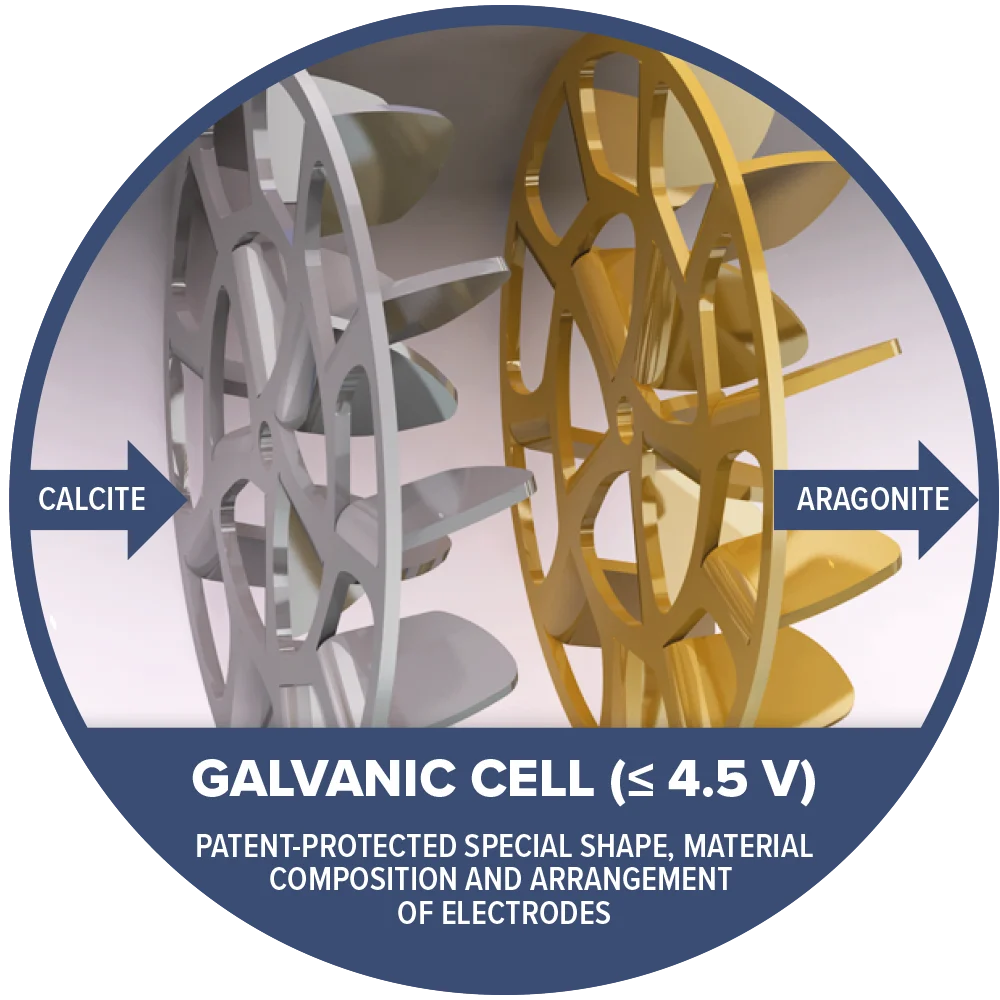
The IPS device is a flow-through body with inlet and outlet connections. Inside the device are specially designed turbine-shaped electrodes made from two electrically conductive materials.

These internal elements are electrodes, not conventional magnets.

The patented electrode geometry generates turbulent water movement and galvanic activity as water passes through the device.


Turbine-shaped IPS electrodes forming a galvanic cell of up to 4.5 volts, with calcite entering and aragonite leaving
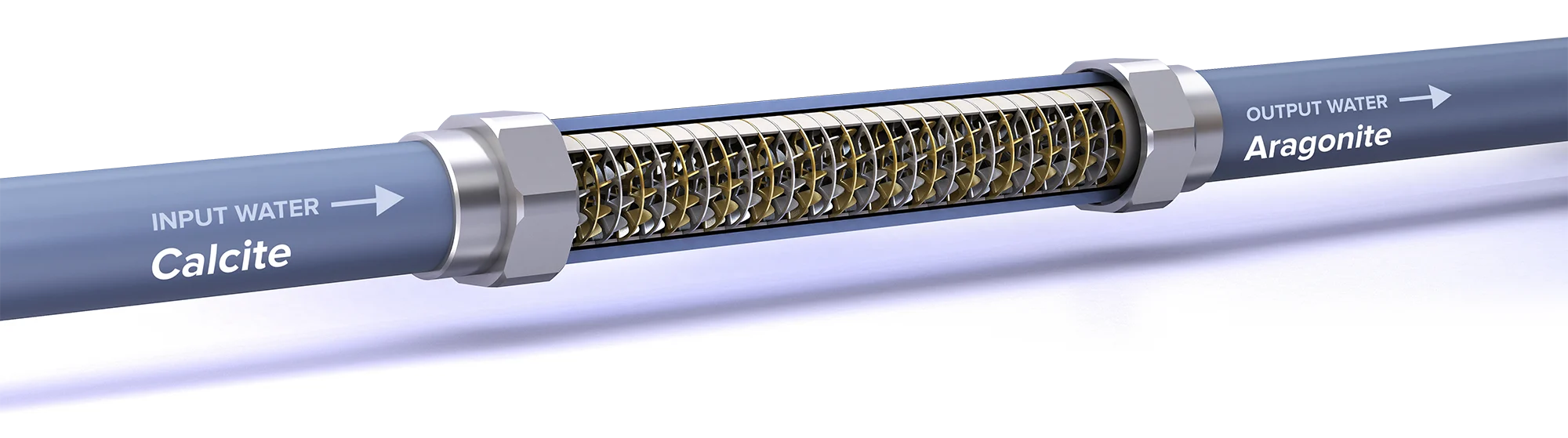
Technical cut-away of an IPS device in a water pipe showing calcite input water and aragonite output water
  1. Hard Water
  2. Turbulent Flow
  3. Galvanic Polarization
  4. Change in Mineral Crystallisation
  5. Reduced Hard Scale Formation

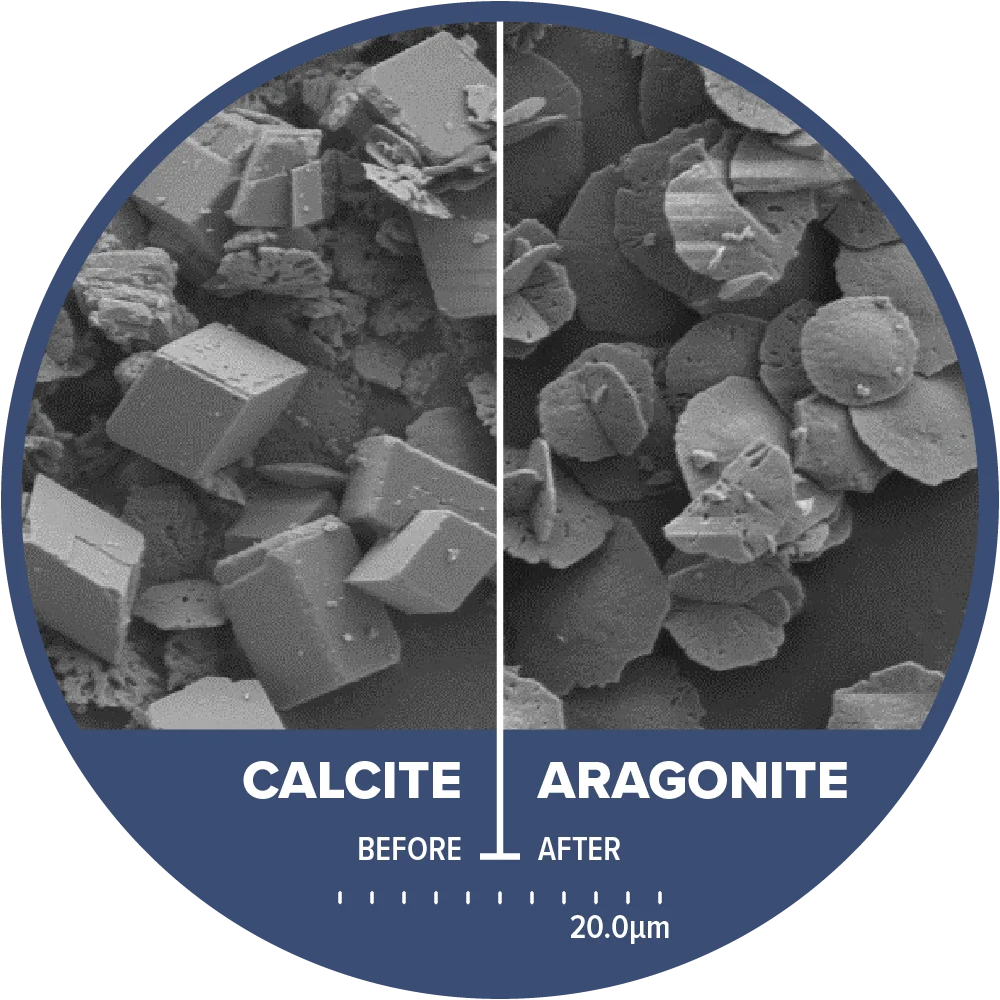
From Hard Calcite Deposits to Softer Mineral Structures

Electron microscope comparison: angular calcite crystals before treatment beside rounded aragonite-type crystals after treatment, 20 micrometre scale
Untreated water — calcite (left) vs. IPS-treated water — modified crystal structure (right).

Calcite

Hard-water minerals commonly form hard calcite deposits. These deposits can strongly attach to:

  • Heating elements
  • Pipes
  • Taps
  • Mixers
  • Shower heads
  • Water heaters
  • Appliance components

After IPS Treatment

IPS technology is designed to influence calcium crystallisation toward softer aragonite-type structures. These deposits are less strongly attached and can be easier to remove.

Sedimentation example

Five kettle bases in sequence showing scale deposits gradually reducing over time after IPS installation

Day 1–15

Existing hard calcite deposits begin gradually releasing.

Around Day 30

New softer deposits can be easier to wipe away.

This is a field example, not a guaranteed cleaning timeframe. Results depend on water chemistry, operating conditions and the selected KalyxX product.

Tested Across Different Water Systems

USA — ScaleRX / IPS

Houston, Texas

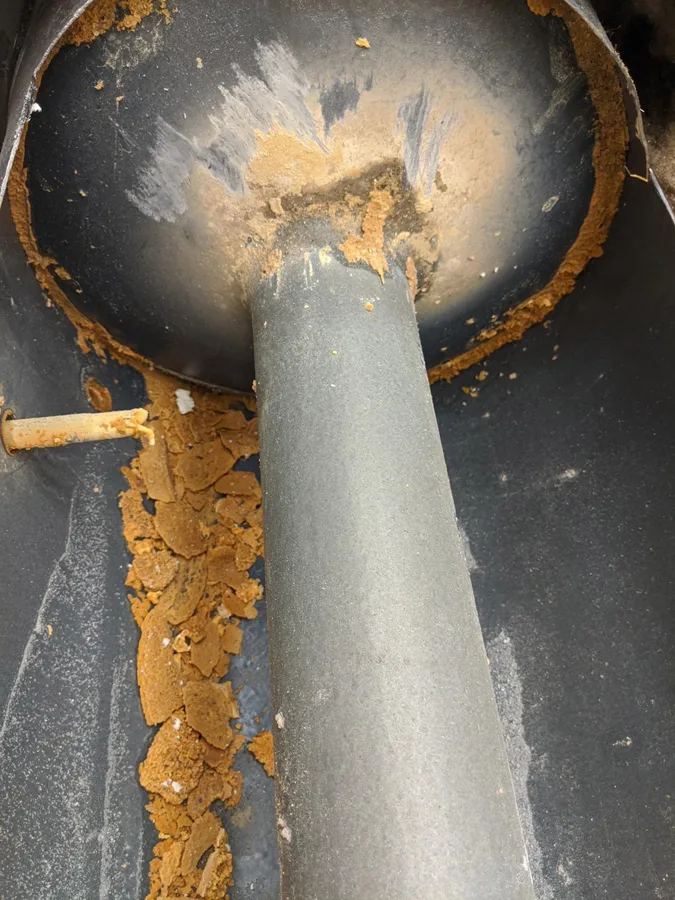
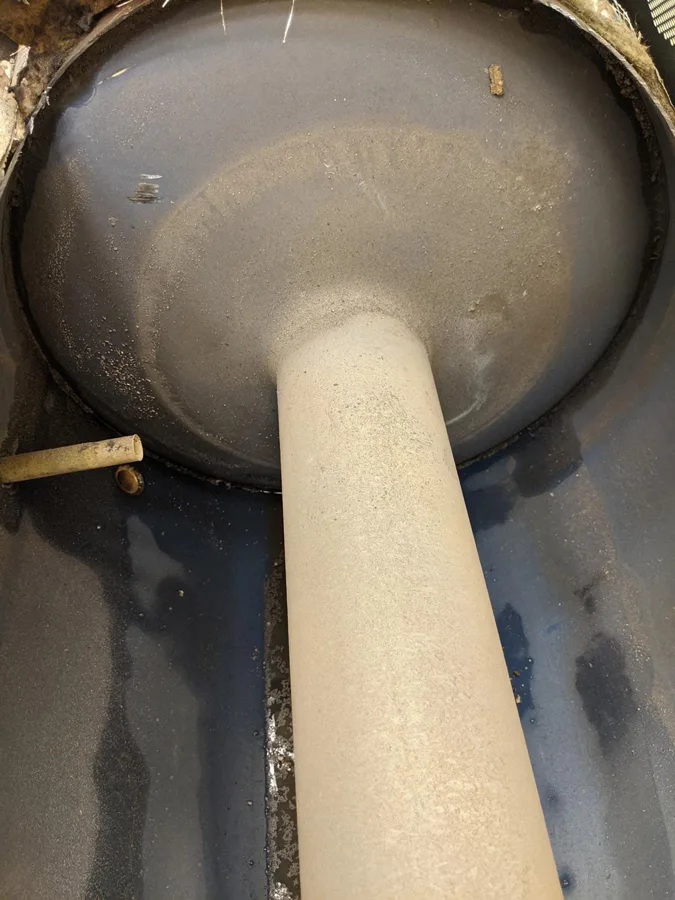
Two similar 40-gallon gas water heaters were installed under comparable conditions and compared after approximately one year.

Without IPS

Water heater tank interior without IPS treatment showing a thick layer of hard sediment after roughly one year of use

Approximately 1 litre of sediment was reported.

With IPS

Water heater tank interior with IPS installed showing a clean surface with no reported sediment after roughly one year of use

No sediment was reported in the supplied test result.

Heating Element — Supplied Comparison

Manufacturer comparison photographs

Two heating elements photographed under the manufacturer's supplied comparison. The photographs are not attributed to a specific market or test site.

Without IPS

Heating element operated without water treatment, coated in thick white limescale

Heating element operated without water treatment.

With IPS

Heating element operated with IPS treatment, showing far less limescale on the coil

Heating element operated with IPS treatment.

Thailand — FlowX

King Mongkut's University of Technology North Bangkok

Testing period of 15 days. Two identical water tanks, two identical heating elements, the same water source and approximately 400 ppm hardness.

Without IPS

Untreated heating element.

With IPS

IPS-treated heating element.

Thailand — IPS Boiler Test

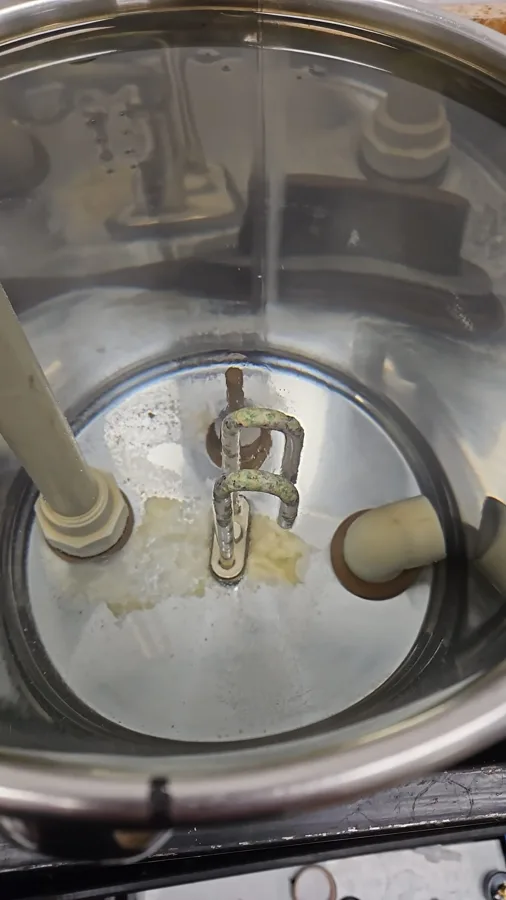
Boiler comparison

Two boilers compared under the same operating conditions.

Without IPS

Boiler B — without IPS: heating element showing visible scale buildup.

With IPS

Boiler A — IPS installed: heating element showing significantly reduced scale formation.

China — IPS

WC cistern field example

The supplied field example shows old limescale releasing approximately two weeks after IPS installation.

Without IPS

Cistern components before IPS installation.

With IPS

Cistern components approximately two weeks after IPS installation.

IPS technology has been evaluated in different markets and water conditions. Actual performance depends on water chemistry, installation and the specific KalyxX product selected.

Recommended Water Properties

pH6.5 – 8.5
Iron< 0.5 mg/l
Hardness< 25 °dH (4.464 mmol/l) · KalyxX Active: < 32 °dH (5.696 mmol/l)
EC< 150 mS/m
TDS< 950 ppm
Salinity< 2000 mg/l

Water chemistry can affect product performance. If the property's water conditions fall outside these recommended parameters, contact our team for an individual product assessment before purchase.

Ask Us About Your Water

Why Choose IPS Technology?

  • Helps change hard calcite formation toward softer aragonite structures
  • Helps reduce the need for frequent descaling
  • Designed not to significantly restrict household water pressure
  • Compatible with copper, CPVC and PVC installations where specified
  • Can be adapted for PEX and other compatible pipe systems
  • Chemical-free technology
  • No external electrical power required
  • Designed for simple installation
  • Low-maintenance operation
  • Helps protect water heaters, taps, mixers, showers and other water-connected equipment
  • Certain IPS products are certified for long-term contact with drinking water — this applies only to products where the supplied certification specifically covers them, and not to the 100 Mini

Limitations you should know

  • Neither system is a water softener. Hardness minerals stay in the water; no sodium is added.
  • Neither system purifies or disinfects water or removes chemical contaminants.
  • The 100 Mini is not suitable for drinking-water treatment and protects one appliance only.
  • RedLine is suitable for cold drinking water per the manufacturer's referenced NRL assessment, but it is a scale-reduction device, not a filter.
  • RedLine must not be installed close to strong electromagnetic fields, especially motors or pumps.
  • High chlorine may reduce IPS electrode lifespan by about 50%. Water outside the recommended range needs an individual assessment.